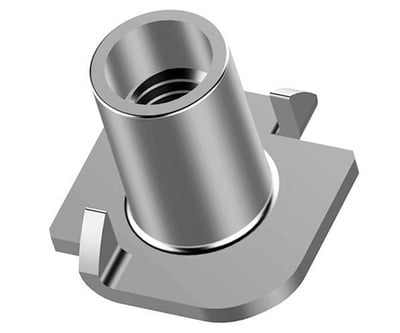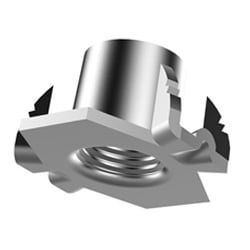
sigma-rivet-tee-nuts

How it Works: The Riveting Process   

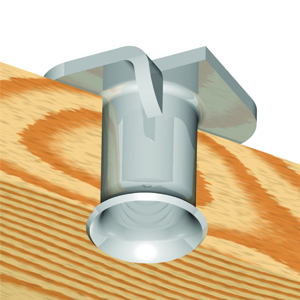
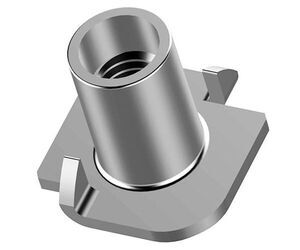
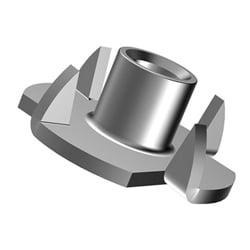
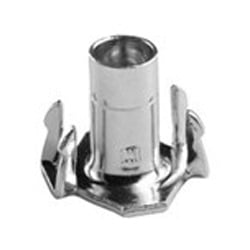
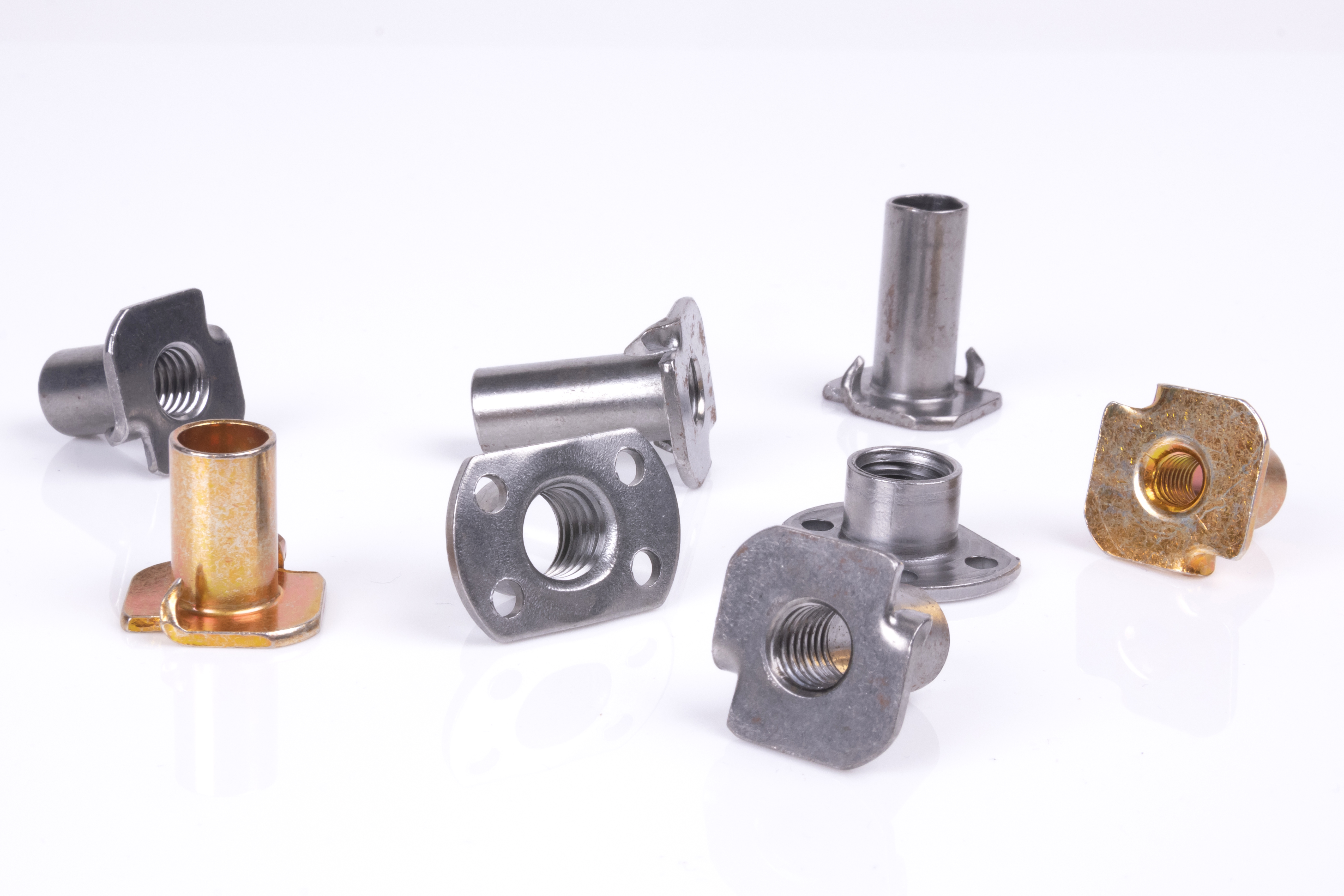
While a standard T-nut relies on sharp prongs to "bite" into the surface of the wood, the Rivet T-Nut uses a more sophisticated mechanical connection. This makes it a superior choice for high-stress joints and softer materials where prongs might pull loose over time.

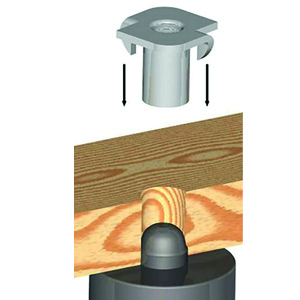
  1. Preparation: A pilot hole is drilled into the material, and the Rivet T-Nut is fed through the automated system or positioned manually.

  2. Insertion: As the insertion machine’s ram applies pressure, the prongs (if present) seat into the wood, while the barrel is pushed through the hole.

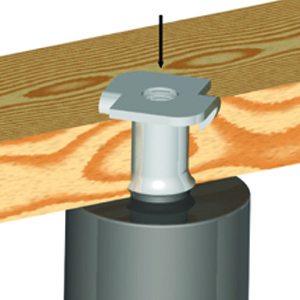
  3. The Rivet Action: The specialised tooling on the reverse side of the material causes the unthreaded "rivet" portion of the barrel to flare outward.

  4. Mechanical Lock: This flared section creates a solid, 360-degree collar on the back of the substrate. This "sandwiches" the material between the flange and the flared barrel, creating a permanent bond that cannot be pushed out or vibrated loose.


Troubleshooting Guide: Solving Common T-Nut Failures  

When a T-nut fails on a production line, it causes downtime, material waste and worst of all, potential field failures. Most issues can be traced back to three factors: hole preparation, material density or tooling alignment.Switch to Rivet T-Nuts: If the material is too soft or prone to crumbling (like low-grade chipboard), the mechanical flare of a Rivet T-nut provides a 360° lock that prongs cannot match.

rivet-tee-nuts

1. The Problem: "Spin-Out" (T-Nut rotates during bolt tightening)

  • The Cause: Usually occurs when the pilot hole is too large, or the material (like high-density MDF) is too hard for the prongs to bite into.

  • The Fix:  Check Hole Diameter: Ensure your drill bit matches the recommended specification for the barrel, not the prongs. Even a 0.5mm difference can reduce torque resistance.

  • Switch to Rivet T-Nuts: If the material is too soft or prone to crumbling (like low-grade chipboard), the mechanical flare of a Rivet T-nut provides a 360° lock that prongs cannot match.

sigma-rivet-tee-nuts-assembly

2. The Problem: "Push-Out" (T-Nut is dislodged when the bolt is inserted)

  • The Cause: This is the most common failure in upholstered furniture. It happens when the bolt hits the T-nut at an angle or when the T-nut isn't seated properly.

  • The Fix: Use "Lead-in" Threads: Ensure you are using Stafast or Sigma nuts with a countersunk "lead" that helps self-align the bolt.

  • Switch to Riveting: A "Knock-in" nut only stays in place through friction. A Rivet T-Nut is physically flared over the back of the wood, making push-out virtually impossible.

rivet-teenut-flared-close-up

3. The Problem: "Jamming" in Automated Feeders

  • The Cause: Using manual-grade nuts in a machine-fed system. Manual nuts often have inconsistent flange thicknesses or "burrs" from the manufacturing process.

  • The Fix:  Upgrade to Machine-Fed (Stafast/Sigma): These are manufactured to tighter tolerances with polished finishes to ensure they glide through vibratory bowls and tracks without catching.


Comparison: Standard Knock-in vs. Rivet T-Nuts

Feature Standard Knock-in T-Nuts Rivet T-Nuts
Fixing Method 4 prongs bite into the wood Barrel is mechanically riveted over
Push-out Resistance Moderate (can be pushed out by bolts) Maximum (physically locked in place)
Installation Manual (Hammer) or basic press Machine insertion (Automated)
Anti-Rotation Prongs prevent spinning Heavy flange & rivet prevent spinning
Assembly Quality Risk of cross-threading Self-centring lead-in for bolts
Secondary Ops Often requires over-stapling No staples required
Production Speed Slower (Manual/Batch) High-speed (Production lines)
Ideal For DIY, Joinery, Low-volume Mass-produced Furniture & Beds


Quick Reference: Which T-Nut Do I Need?

If your problem is..... The Solution is...
Nuts falling out during transit
Switch from Pronged to Rivet T-Nuts.
Bolts cross-threading Use T-Nuts with a Countersunk Lead-in.
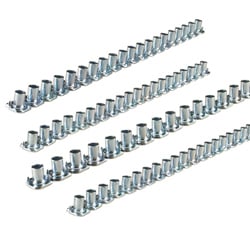
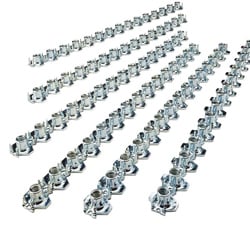
Production is too slow Move to Strip-Feed/Collated T-Nuts.
Material is splitting Use a Large Flange to distribute pressure.


Need a Technical Audit?

If you are experiencing high failure rates on your assembly line, our team can perform a technical audit of your fasteners and tooling. We can help you match the correct drill bit size, material density, and fastener type to ensure a zero-failure production run.


T Nut INSERTION MACHINES  


JET PRESS has supplied and continues to service over 100 T-Nut Machines to furniture manufacturers throughout the UK. We offer support in choosing the
right machine for your application, training for operators and maintenance packages to keep your workshop running. We carry a wide variety of Sigma and Stafast T-Nut sizes with millions stocked in the UK to keep up with production demand.
T-Nut machines offer remarkable speed and accuracy, resulting in consistent placement and alignment of T-Nuts. They provide maximum push-out resistance, and the risk of cross-threading is significantly reduced, ensuring smoother, more reliable threaded connections.

t-nut-insertion-machine
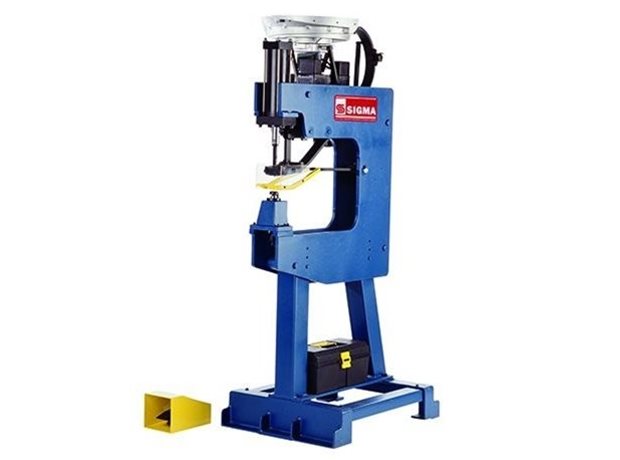
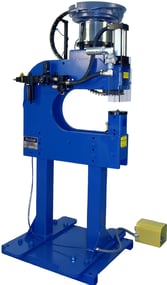
Floor Standing Rivet T Nut Insertion Machine
Image of Stafast T-Nut Machine
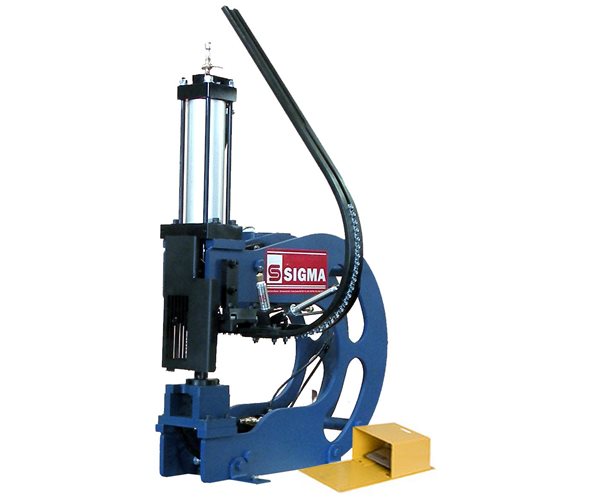
Stafast T Nut Insertion Machine
sigma-t-nut-rivet-table-top-machine
Table Top T Nut Insertion Machine
drill-drive-and-rivet-t-nut-machine
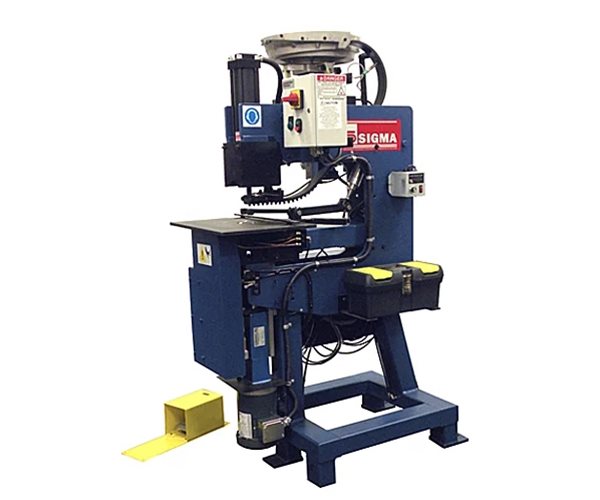
Drill, Drive & Rivet T Nut Machine

Speak To our experts

To speak to one of our experts about our T-Nuts or T-Nut machines please submit the form below. Our team is always happy to help. .